MICC 2015: MEDLIFE Inter-Chapter Conference

Screen Shot 2015-02-16 at 8.45.22 PM

Our first annual MICC event is scheduled to take place on Saturday, March 28th and Sunday, 29th in Montreal, Canada at McGill University. Its theme will be Unresolved Crises.

Vision:

The format for MICC is a conference-style competition between MEDLIFE chapters from across North America. The goal of the event is to create a space for MEDLIFE chapters to bond and collaborate to solve pressing issues related to the theme of the conference: Unresolved Crises. Teams will engage in interactive workshops and a case study competition that will expose them to the challenges in the field of alleviating poverty in respect to the three pillars of MEDLIFE – Medicine, Education, and Development. Lastly, participants will be able to gain insight into the personal and professional experiences of numerous notable professors, members of the community, and students who will be hosting a variety of lectures and discussions about their respective fields as they relate to Unresolved Crises.

Schedule:

The event will start off with M.E.D. Talks-style presentations by professors, community members, and students to inspire attendees to begin thinking critically about global health and the challenges faced within the field. After a break for lunch, conferees will be presented with their case study – a multi-faceted public health scenario that mirrors what MEDLIFE faces in the low-income communities it serves. This case study will pertain to the theme of Unresolved Crises. With the given budget constraints and background information, each team will have time to work together to come up with an effective and realistic solution to present to a panel of judges. There will also be a series of theme- related workshops to further engage the participants while judging takes place. Following the afternoon events, participants are invited for a fun night out to raise money for the MEDLIFE fund (included in the registration fees). On Sunday morning, we will have an awards ceremony to acknowledge the winning team as well as the honourable mentions. The awards ceremony will be followed by a brunch celebration to finish off the event.


SCHEDULE


Friday Night:
Arrival

Saturday (All day Event):
Introductions and MEDLIFE Presentation
Meet & Greet
Keynote Speakers
Lunch
Presentation of Case
Team Preparation/Case Resolution
Final Team Presentations and Workshops
Charity Night Event

Sunday Morning:
Brunch and Awards Ceremony

For the detailed full schedule, click here.


Follow us on Facebook and check out our event page.

For further information, please contact miccmcgill@gmail.com or events@medlifeweb.org.

Summer 2015 Mobile Clinic Trips to Lima, Peru and Moshi, Tanzania

Dear Applicant,

It is with great pleasure that we present you the opportunity to participate in McGill’s Summer 2015 Mobile Medical Clinics with MEDLIFE – Medicine, Education, and Development for Low Income Families Everywhere. MEDLIFE is a non-profit organization working with students from across the United States and Canada to help families achieve greater freedom from the constraints of poverty and empowering them to live healthier lives. Our long-term goal is to make a sustainable impact by building one clinic, one school, one clean water infrastructure at a time.

The two clinics will take place. One from May 2nd, 2015 to May 10th, 2015; destination Lima, Peru and the other from May 16th, 2015 to May 24th, 2015; destination Moshi, Tanzania. The participants will work with local health professionals both in an observational and hands on manner. The participants will witness primary care in a development setting and hopefully gain a better understanding of the inequalities in global health services, and activate a passion for development.

The trip participation fee will be $755 for Lima, Peru and $855 for Moshi, Tanzania, with a $150 non-refundable deposit. It covers accommodation, transportation in country, meals Monday to Friday, and the medicines our clinic will provide. Airfare is additional so it is recommended if you purchase your flight ticket well in advance. Upon confirmation as a participant, you will gain access to a personalized webpage on MEDLIFE’s website from where you can choose to fund-raise; and half of what you raise will go towards your trip.

If interested, please fill out the form below, and you will be contact with information regarding the status of your application.

Spanish knowledge is a strong asset, but not required.

Sincerely,

MEDLIFE McGill Executives

2014-2015

Spring 2015 Reading Week Mobile Clinic Trip to Esmeraldas, Ecuador

Dear Applicant,

It is with great pleasure that we present you the opportunity to participate in McGill’s Reading Week 2015 Mobile Medical Clinic with MEDLIFE – Medicine, Education, and Development for Low Income Families Everywhere. MEDLIFE is a non-profit organization working with students from across the United States and Canada to help families achieve greater freedom from the constraints of poverty and empowering them to live healthier lives. Our long-term goal is to make a sustainable impact by building one clinic, one school, one clean water infrastructure at a time.

The clinic will take place from February 28th, 2015 to March 8th, 2015; destination Esmeraldas, Ecuador. The participants will work with local health professionals both in an observational and hands on manner. The participants will witness primary care in a development setting and hopefully gain a better understanding of the inequalities in global health services, and activate a passion for development.

The trip participation fee will be $800, with $150 non-refundable deposit. It covers accommodation, transportation in country, meals Monday to Friday, and the medicines our clinic will provide. Airfare is additional, but is around $900-1500. Upon confirmation as a participant, you will gain access to a personalized webpage on MEDLIFE’s website from where you can choose to fund-raise; and half of what you raise will go towards your trip.

If interested, please fill out the form below, and you will be contact with information regarding the status of your application.

Spanish knowledge is a strong asset, but not required.

Sincerely,

MEDLIFE McGill Executives

2014-2015

MEDTalks: Healthcare in Marginalized Communities

MEDTalks logo

What: Healthcare in Marginalized Communities
Where: Leacock 219, Leacock Building, McGill University
When: Tuesday 6:30 pm – 9:30 pm on November 18th, 2014
Who: Speakers will be released one by one below!

First Speaker:

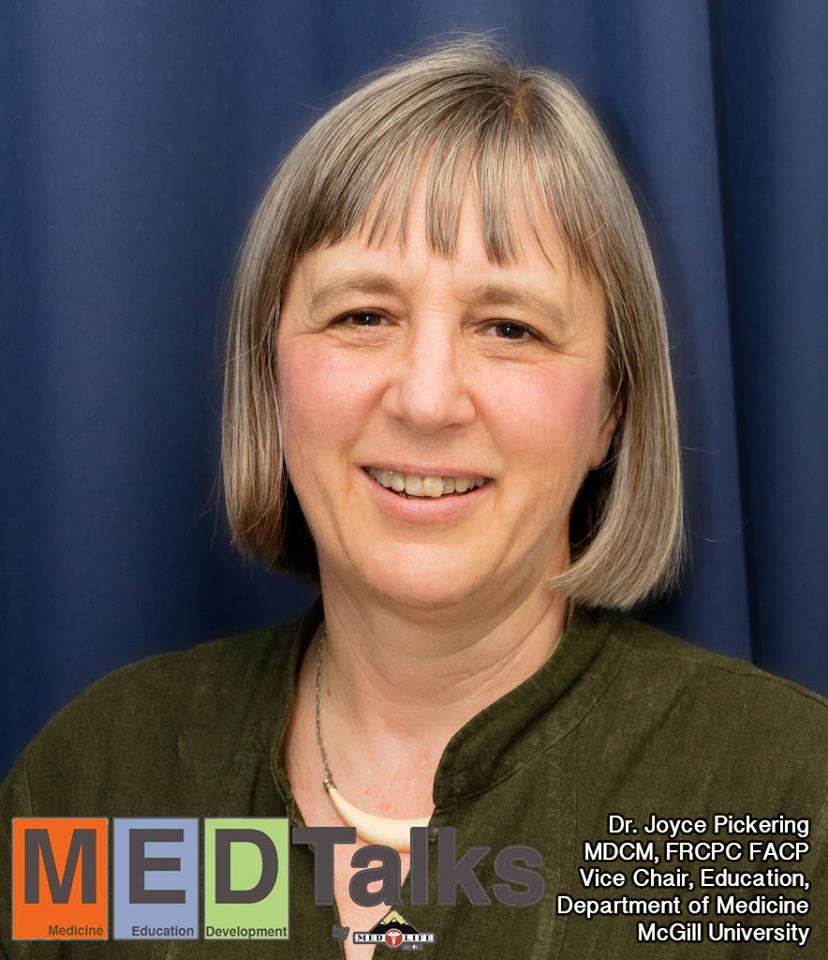
Dr. Joyce Pickering
General Internist and Vice Chair for Education in the Department of Medicine at McGill University

10799338_10152705767274504_888635975_n

MEDLIFE McGill is proud to introduce the first speaker of our Health Care in Marginalized Communities MEDTalks conference, Dr. Joyce Pickering!

Dr. Pickering is a general internist and currently Vice Chair for Education in the Department of Medicine at McGill University. In addition to her involvement in education, she has interests in epidemiology and international health and has worked and taught in Ethiopia, Uganda, India, Russia and Japan. In the area of education she has taught clinical epidemiology, directed undergraduate and graduate clinical training programs, and was the associate dean for undergraduate medical education at McGill University from 2004 to 2011. She taught a 3 credit course, Health in Developing Countries from 1995 through 2004 in the Department of Epidemiology and Biostatistics at McGill, and was the Director of the International Health Office at McGill from 2001 to 2004. She is also a member of the J.D. MacLean Centre for Tropical Diseases at the McGill University Health Centre. She has presented at a number of conferences and published on international health issues. Most recently, she was a visiting professor at the University of Tokyo (2013-2014) where she co-presented with Dr. Kenji Shibuya of the Global Burden of Disease project on implications of the project for medical curricula.

Stay tuned in the upcoming days as we reveal the rest of our amazing speakers!

Second Speaker:

Helen Hsu
4th Year Medical Student and Founder of MEDLIFE McGill

Second Speaker

MEDLIFE McGill is proud to introduce the second speaker of our Health Care in Marginalized Communities MEDTalks conference, Helen Hsu!

Helen Hsu is a 4th year medical student at McGill University who has worked extensively in Montreal on repealing the federal cuts to refugee healthcare which was put in place in 2012. She has also worked with refugees and vulnerable populations both in Montreal and abroad. She is also the founder of MEDLIFE McGill. She will be speaking about the healthcare challenges facing refugees/immigrants/nonstatus persons.

Stay tuned in the upcoming days as we reveal the rest of our amazing speakers!

Third Speaker:

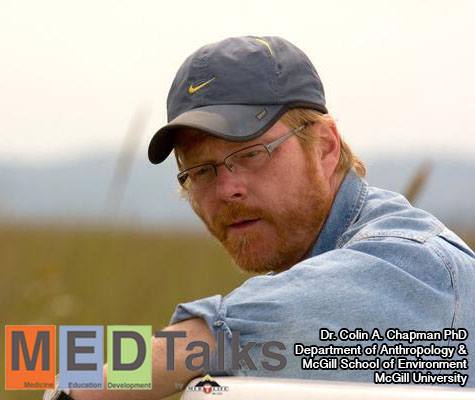
Dr. Colin Chapman
Research Professor in the Department of Anthropology and Environment at McGill University; Post-Doctoral Research completed at Harvard University and McGill University; Fellow of the Royal Society of Canada

10815834_10152711046244504_234539668_n

The third speaker of our Health Care in Marginalized Communities MEDTalks conference is Dr. Colin Chapman!

Dr. Colin Chapman received his joint Ph.D. in the Departments of Anthropology and Zoology at the University of Alberta. He spent 2 years at McGill and 3 years at Harvard University doing post-doctoral research. Since 1990 he has served as an Honourary lecturer in the Department of Zoology at Makerere University Uganda; and, since 1995, he has been an associate scientist with the Wildlife Conservation Society. Colin also served as a faculty member in Zoology at the University of Florida for 11 years, and returned to McGill in 2004 to take up a professorship in the Department of Anthropology and McGill School of Environment, where he holds a Canada Research Chair Tier 1 position in Primate Ecology and Conservation, is a Killam Research Fellow, and is a fellow of the Royal Society of Canada. He has conducted research in Kibale National Park in Uganda for 25 years and is interested in the roles of disease, nutrition, and stress in determining primate abundance and how to best to forge a harmony between the needs of local people and conservation.

Fourth Speaker:

Kaila de Boer
Mental Health and Addictions Counsellor working within the Inuit Community of Hopedale, Labrador

10720993_10152712655174504_1174325472_n

Kaila de Boer is the fourth speaker of the Health Care in Marginalized Communities MEDTalks conference!

Kaila de Boer is a social worker with a background working in Mental Health and Addictions Counseling with the Inuit community of Hopedale, Labrador (pop 550, no road access). Employed by Labrador-Grenfell Health, the regional health authority, she provided individual, couple, family, group, and community-level services in a highly collaborative and interdisciplinary manner. Living within the community and collaborating extensively across disciplines and agencies she garnered a unique experience of how to improve health and mental health in underprivileged communities. The focus of this presentation will be the strengths and challenges of work in small and isolated communities of Canada’s north.

If you are interested in learning more about Kaila or any of our other amazing speakers, please come to Leacock room 219 from 6:30pm – 9:30pm for our Health Care in Marginalized Communities MEDTalks conference!

“Building the Fence” by a McGill Volunteer

“Building The Fence” by a McGill Volunteer

The finished wall

When I had registered for the first ever MEDLife Development Corps trip with McGill last February I had no clear idea what to expect. I knew that we were travelling to Lima-Peru to build a fence around a vibrant little playground in a suburban area of the city, called Laderas Nueva Esperanza. What I didn’t know was that we would gain exponentially more from the people of this community than we could ever give back to them.

Arriving early on our first day of development work, the bright swings and slides awaited us down several flights of stairs, and so did many members of the Laderas community. The playground was built by a North American church group, which was poorly placed on the edge of a rocky decline and subsequently left without a fence. Our job was simple— to build a fence so the children could play safely.

The next few days were spent carrying materials down into the work area, moving rocks and sand, pouring concrete powder and water, mixing the materials into concrete, filling buckets of concrete, pouring concrete, and repeating the process. Although our workday consisted entirely of manual labour, we had the opportunity to spend that time working side by side with the members of Laderas de Nueva Esperanza. During lunch break, the kids, women, and men would eat, talk, laugh, and play with us; the women often brought us homemade chicha and other homemade snacks, like boiled yucca and eggs.

After a busy workday, we would explore the downtown core of Lima around the Miraflores district, the area around our hostel. We’d walk down to the beach or to President Kennedy Park where you could see artistic performances (singers, stand-up comedians, painters) and cats roaming freely around. We were encouraged by MEDLife leaders to explore the many things Lima had to offer to us, from checking out restaurants in a restored Spanish mansion in Barranco to Sunday salsa dancing in downtown Lima. They even organized a boat trip through the southern coastal region of Peru, in Paracas (sometimes called the mini Galapagos of Peru), which also included a sand boarding and a ride on a dune buggy through the Ica desert by an oasis. We also visited a Peruvian winery and tried both wine and the world-famous Pisco.

It is definitely shocking to see the disparity of wealth between communities like Miraflores (the borough where we were staying) and Laderas de Nueva Esperanza, especially due to their proximity. However, that is why I think MEDLife’s initiatives are so important: they provide essential services and development projects to communities that need help but more importantly to communities that want help. Carlos, our leader, works closely with the communities to see what are their priorities and needs, like the fence was for Laderas de Nueva Esperanza. The full-time MEDLife staff in Peru, from the nurses to the administrative employees, is dedicated to making the Organization’s efforts more sustainable so that projects are not left half-finished, but rather evolve.

Summarizing the trip to Lima and Laderas de Nueva Esperanza is not an easy task. The development trip allowed my group and I to provide a means to alleviate poverty by collaborating with local families in improving their quality of life. I left Lima with a lot more Vitamin D, muscles, and knowledge than when I had arrived a week earlier –and also a bittersweet feeling of saying goodbye.